Beneath the Surface: Congo’s Hidden Architectural Soul in Brazzaville
You know what? I never expected to fall in love with a city’s bones—but Brazzaville did it for me. Between the vibrant markets and riverfront chaos, I found something deeper: stories carved in concrete, iron, and sunlight. This isn’t just about buildings—it’s about identity, resilience, and the quiet beauty of African modernism standing tall through time. In a world where cities often blur into one another, Brazzaville remains distinct, not because of grandeur, but because of its layered soul. Every street corner whispers history, every façade reflects adaptation, and every structure—whether crumbling or newly built—tells of a people who shape their environment with quiet determination.
First Impressions: Chaos, Color, and the Unexpected Charm of Urban Brazzaville
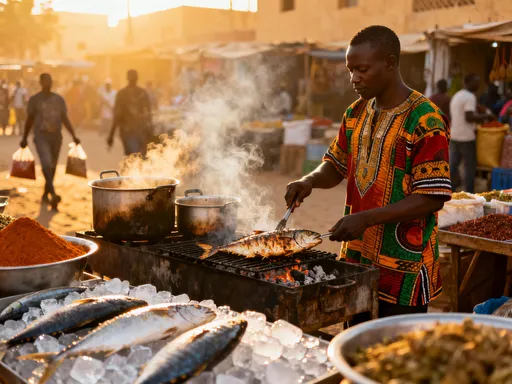
Brazzaville greets visitors not with quiet elegance, but with a symphony of motion and sound. The city pulses with life—minibuses honk in rhythmic urgency, red laterite dust rises with each passing motorbike, and the scent of grilled fish mingles with diesel fumes along Avenue Colonel Édouard. At first glance, the urban landscape appears unstructured, even chaotic. Yet, as one spends more time navigating its streets, a subtle order begins to emerge—one shaped by decades of cultural convergence, political shifts, and grassroots ingenuity.
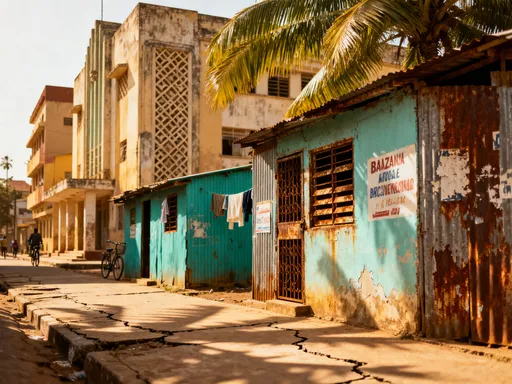
The city’s layout reveals its origins as a colonial capital, planned with geometric precision by French administrators in the early 20th century. Broad avenues radiate from central squares, and certain districts still follow a grid pattern reminiscent of European urban design. But over time, the rigid framework has been softened—and in some places, overwritten—by organic growth. Neighborhoods like Bacongo and Makelekele exemplify this blend. Here, pastel-colored Art Deco villas with ornate iron balconies stand just meters from homes built of corrugated metal and repurposed timber, their walls painted in bright blues, yellows, and greens. These contrasts are not signs of neglect, but of adaptation—a living dialogue between past and present.
What makes Brazzaville’s architecture so compelling is its honesty. There is no attempt to hide the wear of time or the realities of limited resources. Instead, buildings evolve with their inhabitants. A colonial-era home might now house a family-run grocery, its shuttered windows converted into a storefront. A former administrative office could double as a community meeting space, its courtyard alive with children’s laughter. This constant reimagining reflects a deeply rooted cultural value: utility infused with dignity. The city does not preserve its history in glass cases; it lives it, breathes it, and rebuilds it every day.
Colonial Echoes: The Legacy of French Urban Planning and Architectural Imprints
At the heart of Brazzaville lies a legacy etched in stone and stucco—the imprint of French colonial urban planning. The government district, centered around Place de l’Indépendance, remains a testament to early 20th-century ambitions. Wide boulevards, symmetrical plazas, and neoclassical facades speak of an era when order and hierarchy defined the urban ideal. Buildings such as the old Post Office and the Palais du Peuple were constructed not just for function, but for symbolism. They were meant to project authority, to impress, and to assert a certain vision of civilization.
The old Post Office, with its arched colonnades and faded ochre walls, once served as the central node of communication in French Equatorial Africa. Today, though weathered by humidity and time, it continues to operate, its interior humming with the quiet activity of clerks and citizens. The Palais du Peuple, a grand structure with a sweeping staircase and colonnaded entrance, now hosts parliamentary sessions and national ceremonies. These buildings have outlived their original purposes, yet remain vital to the city’s civic life. Their survival is not merely architectural—it is cultural. They are no longer symbols of foreign control, but of national continuity.
Yet preservation remains a challenge. The tropical climate, with its high humidity and seasonal rains, accelerates the decay of masonry and metal. Many colonial structures suffer from cracked facades, peeling paint, and weakened foundations. Urban expansion adds further pressure, as demand for commercial and residential space often leads to demolition or insensitive renovations. In some cases, historic buildings are replaced by generic high-rises that disregard the scale and rhythm of the existing streetscape. This tension between development and heritage is not unique to Brazzaville, but it is especially poignant here, where the built environment is one of the few tangible records of a complex past.
Still, there are signs of renewed appreciation. Local architects and heritage advocates have begun documenting colonial-era buildings, advocating for their restoration using traditional materials and techniques. Some projects have successfully blended old and new—retaining original façades while modernizing interiors for contemporary use. These efforts reflect a growing understanding: that preserving history is not about freezing a city in time, but about allowing it to grow with respect for its roots.
Post-Independence Visions: Modernism with an African Pulse
When Congo gained independence in 1960, Brazzaville entered a new architectural era—one defined by ambition, optimism, and a desire to assert a modern African identity. The post-independence government, inspired by pan-African ideals and socialist planning models, commissioned bold new structures that broke from colonial aesthetics. This was the age of African modernism: clean lines, geometric forms, and an emphasis on functionality tempered with symbolic power.
Concrete became the material of choice, not only for its durability but for its ability to convey strength and progress. Government ministries rose with angular silhouettes, their façades adorned with brise-soleil—latticed concrete screens designed to diffuse the intense equatorial sun. These architectural features were not merely decorative; they responded directly to climate, reducing indoor temperatures and minimizing the need for artificial cooling. Public housing complexes, such as those in the Téké district, followed similar principles, with open corridors, shared courtyards, and elevated walkways that encouraged community interaction.
Schools, hospitals, and cultural centers built during this period reflect the same ethos. The École Normale Supérieure, for instance, features long, linear blocks arranged around shaded courtyards, promoting natural ventilation and light. The design prioritizes practicality without sacrificing dignity—students learn in spaces that feel institutional yet humane. Similarly, local health centers from the 1970s often incorporate wide overhangs and cross-ventilation, making them more comfortable in the humid climate while remaining cost-effective to maintain.
What sets this era apart is its fusion of international modernist principles with local sensibilities. While the architecture drew from global trends—particularly Brutalism and Scandinavian functionalism—it was adapted to Congo’s context. Buildings were scaled to human proportions, materials were chosen for local availability, and communal spaces were designed to reflect social values. This was not imitation, but reinterpretation. Even today, these structures serve as quiet reminders of a time when architecture was seen as a tool for nation-building—a way to shape not just cities, but citizens.
Religious Spaces: Where Spirit Meets Structure
In Brazzaville, places of worship are more than spiritual sanctuaries—they are architectural anchors that reflect the city’s diverse faith traditions and creative spirit. From the towering brick curves of the Cathédrale Sacré-Cœur to the understated elegance of neighborhood mosques, religious buildings contribute significantly to the city’s visual and cultural fabric. Each structure tells a story of belief, craftsmanship, and community.
The Cathédrale Sacré-Cœur, located near the city center, is one of Brazzaville’s most recognizable landmarks. Its red brick façade rises in gentle arches, evoking both Gothic inspiration and African artistry. Inside, the space is illuminated by stained glass windows depicting biblical scenes with distinctly Congolese motifs—figures dressed in traditional textiles, landscapes filled with palm trees and baobabs. The wooden pews, hand-carved by local artisans, bear intricate patterns that echo regional textile designs. This blending of European ecclesiastical forms with African artistic expression is not accidental; it represents a long-standing tradition of cultural synthesis within the Church.
Islamic architecture in Brazzaville, while less prominent in number, is equally significant. Mosques and Islamic cultural centers often feature clean, geometric lines, white-washed walls, and domed roofs. Yet, even here, local influences are evident. Courtyards are designed for communal gathering, reflecting the importance of social ties in Muslim life. Wooden doors and window frames are frequently hand-carved with geometric and floral patterns, showcasing the skill of Congolese woodworkers. Some newer mosques incorporate modern materials like concrete and glass while maintaining traditional spatial layouts, demonstrating a balance between continuity and innovation.
What unites these religious spaces is their role as community hubs. They are not isolated from daily life but embedded within neighborhoods, often surrounded by small markets, schools, or health posts. During festivals and weekly services, they become centers of activity, drawing people together across generations. Their architecture—whether grand or modest—reinforces a sense of belonging. In a city where change is constant, these spaces offer stability, not just in faith, but in form.
The Rise of Informal Architecture: Creativity in the Everyday
Outside the planned districts, in the sprawling neighborhoods that climb the city’s hillsides, another kind of architecture thrives—one born not from blueprints, but from necessity and imagination. This is the world of informal settlements, where residents construct homes from whatever materials they can find: salvaged wood, repurposed metal sheets, cinderblocks, and even old shipping containers. To the untrained eye, these areas may appear haphazard, but a closer look reveals intention, resourcefulness, and deep social logic.
Each home is a personal statement. Façades are painted in vibrant colors—electric blue, sunflower yellow, deep coral—often with decorative patterns added by hand. Windows are framed with recycled metal, and doors are sometimes adorned with hand-carved motifs. Elevated floors are common, raising living spaces above damp ground and improving airflow—a practical adaptation to the humid climate. Shared courtyards serve as communal spaces where neighbors cook, socialize, and care for one another’s children. These design choices are not random; they reflect a sophisticated understanding of environment, family, and community.
What makes informal architecture so remarkable is its responsiveness. Unlike formal construction, which can take months or years, these homes evolve in real time. A family might start with a single room and gradually expand as resources allow. A tin roof might be replaced with concrete when savings permit. This incremental growth mirrors the rhythms of daily life, where progress is measured not in square meters, but in stability and security.
Moreover, these neighborhoods are not isolated from the city’s economy or culture. Many residents run small businesses from their homes—tailoring shops, food stalls, hair salons—blurring the line between domestic and commercial space. This integration strengthens social networks and fosters economic resilience. While challenges such as access to clean water, sanitation, and electricity persist, the creativity on display is undeniable. Informal architecture is not a failure of planning; it is a testament to human adaptability and the enduring desire for a dignified home.
Riverfront Rhythms: How the Congo Shapes the City’s Built Environment
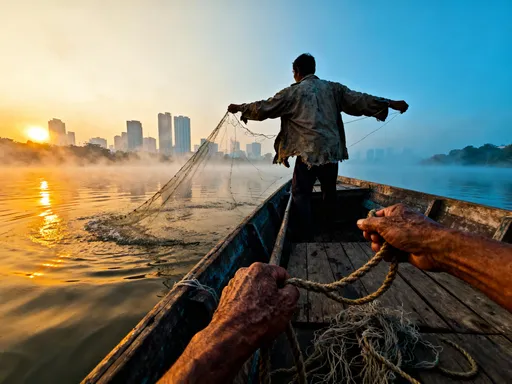
The Congo River is more than a geographic boundary—it is a living force that shapes Brazzaville’s identity, economy, and architecture. As one of the deepest and most powerful rivers in the world, it influences everything from transportation to construction methods. Along the riverfront, the city’s relationship with water becomes visibly tangible, from the wooden fishing docks of Pointe-Noire to the stilt houses that rise above seasonal flood zones.
In the district of Poto-Poto, near the ferry terminal, small-scale boat builders craft wooden pirogues using techniques passed down through generations. These vessels, essential for crossing to Kinshasa or fishing in the river’s channels, are constructed on the shore, their curved hulls shaped by hand. Nearby, homes are built on raised foundations or stilts, protecting them from annual floods. Walls are often made of treated wood or concrete blocks, materials chosen for their resistance to moisture. Roofs are steeply pitched to allow rainwater to run off quickly, and overhangs provide shade while directing water away from walls.
The river also dictates movement and access. Because road connections to other regions are limited, much of Brazzaville’s trade and travel happens by water. The ongoing development of the new port area reflects this reality, with modern docking facilities being constructed to accommodate larger vessels. This project, while promising economic growth, also raises questions about displacement and environmental impact. As construction progresses, some riverside communities have been relocated, disrupting long-standing social networks.
Yet, the river remains a source of inspiration. Architects and urban planners are increasingly considering flood-resilient designs, green buffers, and public spaces that celebrate the waterfront rather than wall it off. There is growing recognition that the city’s future must be shaped not in opposition to the river, but in harmony with it. Views of the water are now seen as valuable assets, influencing the placement of new residential and commercial buildings. In this way, the Congo continues to be not just a backdrop, but a co-author of Brazzaville’s built environment.
The Future of Memory: Balancing Preservation and Progress
Brazzaville stands at a crossroads. New high-rises rise along Avenue Boutrais, glass and steel structures that signal economic ambition and modernization. Meanwhile, older buildings—some historic, others simply functional—face neglect, demolition, or unsympathetic renovation. The city’s growth is inevitable, but the question remains: how can progress coexist with memory?
Urban renewal projects have brought improvements in infrastructure and housing, yet they often prioritize speed and efficiency over heritage. In some cases, entire blocks of colonial or post-independence buildings have been cleared to make way for commercial developments. While these projects create jobs and generate revenue, they also erase layers of history that cannot be rebuilt. The loss is not just architectural, but cultural—a weakening of the city’s collective memory.
Local architects and urban planners are increasingly advocating for a more balanced approach. There is a growing movement to identify and protect structures of historical and cultural significance, not through museum-like preservation, but through adaptive reuse. A former administrative building could become a cultural center; a disused school might be transformed into affordable housing. These solutions respect the past while serving present needs.
Education also plays a role. Architecture students at Marien Ngouabi University are being taught to see value in all forms of built heritage—from colonial landmarks to informal settlements. Field studies, documentation projects, and community workshops help foster a sense of ownership and pride in the city’s diverse architectural landscape. When people understand the stories behind their buildings, they are more likely to protect them.
The path forward requires collaboration—between government, professionals, and residents. Policies must support sustainable development that includes heritage assessments, community consultation, and environmentally sound practices. Investment in maintenance and restoration should be seen not as a cost, but as an investment in identity. Brazzaville does not need to choose between old and new; it can embrace both, creating a city where every generation leaves its mark without erasing the ones before.
Conclusion: Building Identity, One Brick at a Time
Brazzaville’s architecture is not defined by monuments alone, but by the quiet resilience of everyday spaces. It is a city where colonial facades stand beside hand-built homes, where concrete ministries rise near wooden prayer halls, and where the river’s rhythm shapes the very ground people build upon. Each structure, whether grand or humble, carries a story of adaptation, identity, and hope.
To walk through Brazzaville is to witness history in motion. The city does not hide its scars or its struggles; it transforms them into strength. Its buildings are not static relics, but living participants in the lives of those who inhabit them. They shelter families, host celebrations, and endure through seasons of change. In their walls, one can see the imprint of colonial ambition, the pride of independence, the ingenuity of informal communities, and the promise of a future shaped with care.
Preserving Brazzaville’s architectural soul does not mean freezing it in time. It means recognizing that progress and memory are not opposites, but partners. It means valuing not only what is new, but what has endured. As the city continues to grow, may it do so with intention—honoring its past, engaging its present, and building a future where every brick tells a story worth keeping.