Taste the Festival: How Chiang Rai’s Street Food Steals the Show
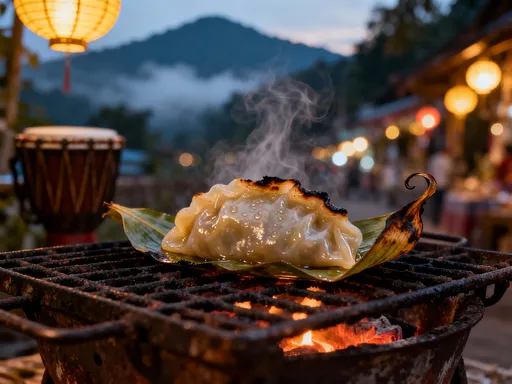
Imagine biting into a steaming dumpling wrapped in banana leaf, spiced with herbs you can’t name, as drumbeats echo through the night. In Chiang Rai, Thailand, festivals aren’t just about lights and dances—they’re flavor explosions. I’ve never seen food so deeply tied to celebration, tradition, and community. Every dish tells a story, every aroma pulls you deeper. This is not just eating—it’s experiencing culture with every bite. From misty mountain villages to bustling night markets, Chiang Rai transforms during festival season into a living banquet where taste, memory, and meaning converge. Here, food is not an accessory to celebration; it is the celebration itself.
The Heartbeat of Chiang Rai: Festivals That Feed the Soul
Chiang Rai pulses with rhythm during its annual festivals, where tradition flows as freely as river water through rice paddies. The Yi Peng Lantern Festival, celebrated under a canopy of flickering sky lanterns, is more than a visual marvel—it is a spiritual release, a moment when wishes rise with light into the heavens. Families gather in temple courtyards, children clutching handmade lanterns, elders offering prayers with quiet devotion. At the same time, the scent of grilled meats and simmering curries fills the air, linking the sacred and the savory in seamless harmony. These festivals are not staged for cameras; they are lived experiences, rooted in centuries of Buddhist practice and agrarian life.
Songkran, the Thai New Year, transforms Chiang Rai into a city of joy and renewal. While water fights dominate headlines, the true heart of the festival lies in ritual and family. Homes are cleaned, altars refreshed, and elders honored with gentle water-pouring ceremonies. But alongside these customs comes an outpouring of food—special dishes prepared only once a year, like khao chae, a delicate iced rice dish served with fragrant side accompaniments. These meals are not merely nourishment; they are acts of love, memory, and continuity, passed from one generation to the next.
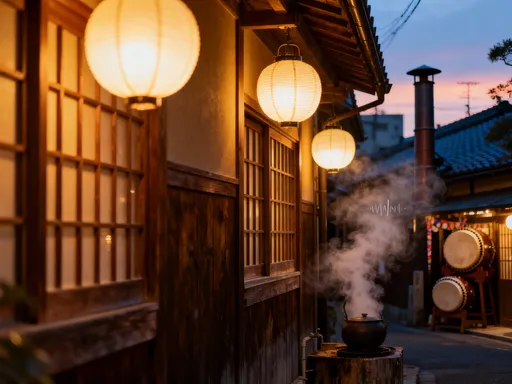
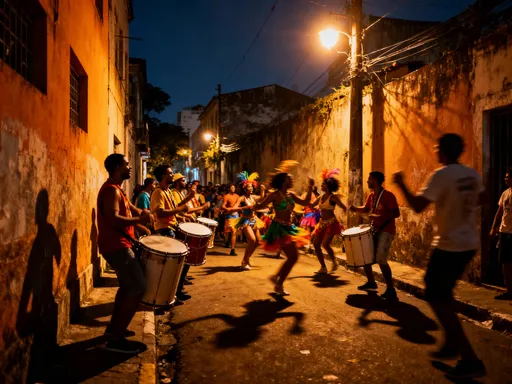
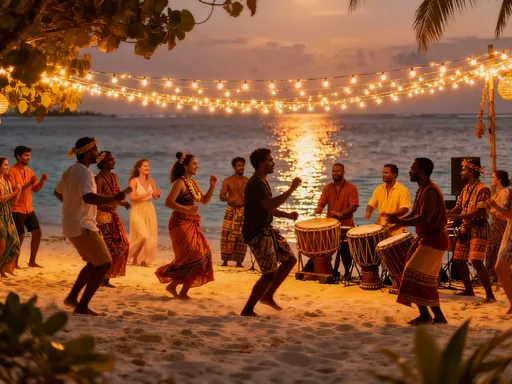
The festival atmosphere is immersive. Lanterns glow like fireflies above temple rooftops, their golden light reflecting off polished tiles. Drums beat in steady pulses, monks chant in low tones, and the air carries a blend of incense, jasmine, and chili smoke. Visitors are not outsiders here—they are welcomed participants. A child might hand you a flower garland; an elder may gesture for you to join a seated meal. This inclusivity is central to Chiang Rai’s spirit. And at the center of it all, food serves as both offering and invitation—a way to say, “You belong.”
From Farm to Festival: The Roots of Northern Thai Cuisine
To understand Chiang Rai’s festival food, one must first understand its land. Nestled in Thailand’s northern highlands, the province is a patchwork of terraced rice fields, hill tribe villages, and organic farms that stretch toward Myanmar’s border. The soil is rich, the climate temperate, and the farming methods deeply traditional. Many families still plant by hand, harvest with sickles, and dry rice on woven mats under the sun. This connection to the earth shapes not only what is grown but how it is honored at festival time.
Sticky rice, known locally as khao niao, is more than a staple—it is a symbol of resilience and unity. Harvested in the fall and stored in bamboo silos, it is steamed in conical baskets and served in every home during celebrations. Galangal, lemongrass, kaffir lime leaves, and turmeric grow in backyard gardens or are gathered from forest edges, their pungent aromas forming the backbone of northern Thai flavor. Wild herbs like phak wan and krachet add depth to curries and salads, their names unfamiliar to most tourists but deeply known to local cooks.
Chiang Rai’s tea plantations also play a quiet but vital role. Oolong and green tea are grown in rolling hills near Doi Mae Salong, where ethnic Chinese communities have farmed for generations. During festivals, tea is served not just as a drink but as a gesture of hospitality—poured into small cups and shared among guests. Even desserts reflect the land: banana fritters fried in coconut oil, mangoes ripened on the vine, and sesame-coated rice balls made with local black glutinous rice.
This farm-to-festival cycle ensures authenticity. Unlike mass-produced street food found in tourist zones, Chiang Rai’s festival dishes are seasonal, regional, and often made only when the occasion calls for them. There is no frozen stock, no imported ingredients—just what the land provides and what tradition demands. For travelers, this means every bite carries a trace of the soil, the season, and the soul of the community.
Street Eats & Sacred Bites: Where Tradition Meets Flavor
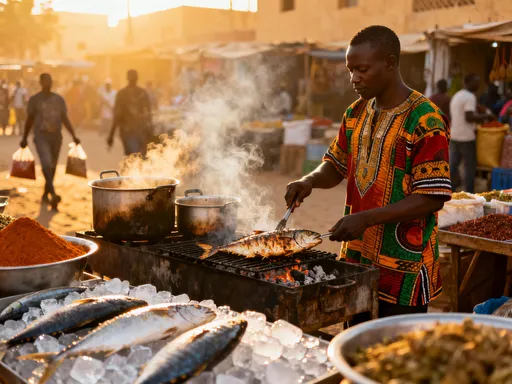
When festival season arrives, Chiang Rai’s streets transform into open-air kitchens. Bamboo stalls rise overnight, their thatched roofs fluttering in the mountain breeze. Grills sizzle with marinated meats, clay pots bubble with curry, and banana leaves are folded into perfect parcels of steamed goodness. This is where tradition meets taste, where centuries-old recipes are served on paper plates with a side of laughter.
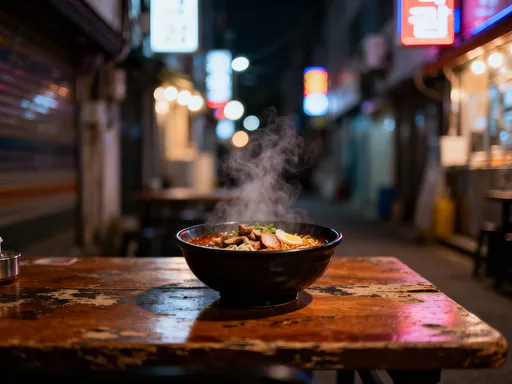
One cannot speak of Chiang Rai’s street food without mentioning khao soi. This rich, coconut-based noodle soup, topped with crispy fried noodles and pickled mustard greens, is a festival favorite. Each vendor has their own version—some spicier, some creamier—but all share a deep, aromatic broth built from roasted curry paste and slow-simmered chicken or beef. Served with a wedge of lime and a heap of raw shallots, it is comfort in a bowl, especially on cool mountain evenings.
Another star is sai ua, the fiery Chiang Rai sausage packed with lemongrass, kaffir lime, chilies, and fresh herbs. Unlike Western sausages, it is coarse, fragrant, and meant to be eaten with sticky rice and fresh vegetables. At festivals, it is grilled over charcoal, its smoky aroma drawing crowds like moths to flame. Vendors slice it into rounds and serve it on small plates, often alongside a fiery chili dip called nam prik noom.
Then there is gaeng hang lay, a Burmese-influenced pork curry that speaks to Chiang Rai’s borderland heritage. Thick, sweet, and deeply spiced with ginger and tamarind, it is slow-cooked until the meat falls apart. Served with steamed rice or khao niao, it is a dish of patience and care—often prepared the night before a festival so the flavors can deepen. These are not fast bites; they are slow, intentional meals meant to be shared.
What makes these dishes sacred is not just their taste but their timing. Many are made only during festivals, reserved for moments of gratitude and gathering. A grandmother might prepare gaeng hang lay only once a year, for Loy Krathong. A family might save their best pork to make sai ua for Songkran. These foods are not commodities—they are heirlooms, passed down and honored with each preparation.
Behind the Stall: Meet the Makers Keeping Recipes Alive
Every festival meal begins with hands—weathered, skilled, moving with quiet precision. Behind the bamboo stalls, grandmothers knead dough for dumplings, uncles stir giant pots of curry, and teenagers flip sausages with practiced ease. These are not restaurant chefs in white coats; they are community members, often cooking in the same spot their parents and grandparents once did.
There is no written recipe for khao soi in many households. Instead, knowledge is passed through doing—through watching, tasting, adjusting. A grandmother might say, “Add more galangal when the air is damp,” or “Let the curry paste roast until it smells like rain on hot stone.” These are not metaphors; they are real cues, learned over decades of cooking in open-air kitchens where the weather, the wood fire, and the mood of the day all influence the final dish.
The informal apprenticeship system is alive and well. Younger relatives learn by standing beside elders during festival prep, grinding spices on stone mortars, or folding banana leaves into perfect triangles. Mistakes are corrected gently; successes are celebrated with a shared bite. There is no diploma, no certificate—just the quiet pride of carrying forward a family’s culinary legacy.
For many of these cooks, the festival is not a business opportunity but a duty. They do not cook for fame or profit but to honor ancestors, feed neighbors, and preserve what is theirs. A vendor might wake at 4 a.m. to prepare ingredients, not because they must, but because they believe the festival deserves their best. Their stalls may be simple—plastic stools, a tarp for shade, a single pot over charcoal—but their impact is profound.
Travelers may never know the cook’s name, but they taste their care. In every bite of sai ua, there is a lifetime of tradition. In every spoon of khao soi, there is a story of home. These are not faceless vendors; they are the guardians of flavor, the quiet heroes of Chiang Rai’s cultural heartbeat.
Navigating the Night Markets: A Traveler’s Guide to Festival Feasting
For visitors, the festival night markets of Chiang Rai can be both thrilling and overwhelming. The air hums with energy, the stalls glow with string lights, and the choices seem endless. To make the most of this culinary adventure, a few practical tips can help ensure a safe, authentic, and deeply satisfying experience.
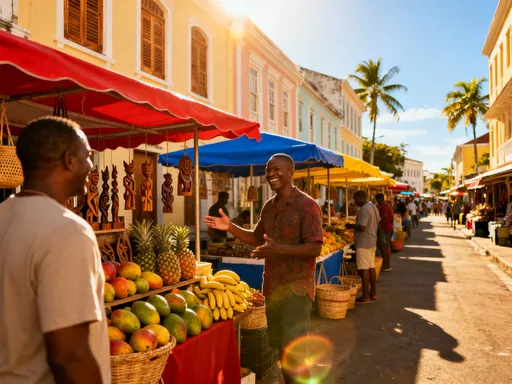
Timing is key. The best markets come alive in the late afternoon and stay busy until midnight. Warorot Market, Chiang Rai’s oldest and most vibrant, is especially lively during Loy Krathong and Yi Peng. Arriving around 5 p.m. allows you to beat the biggest crowds while still catching the full spectrum of dishes. Weekends are naturally busier, but that also means higher turnover—always a good sign for freshness.
When choosing what to eat, start with the classics. Khao soi is widely available and easy to find, but look for stalls with a steady stream of locals. A busy queue is often the best indicator of quality. Sai ua should be fragrant, not greasy, with a deep red hue from chili and herbs. If you’re feeling adventurous, try nam ngiao, a sour pork and tomato noodle soup with a spicy kick and a hint of fermented soybean.
Hygiene matters. While street food in Chiang Rai is generally safe, it’s wise to use hand sanitizer before eating and to avoid dishes that have been sitting out uncovered. Choose vendors who handle food with utensils or gloves, and opt for items that are cooked to order. Bottled water is recommended, and it’s best to avoid ice unless it’s from sealed packs.
Be prepared for cash-only transactions. Most vendors do not accept cards, and ATMs can be crowded during peak festival times. Carry small bills for easier payments. Tipping is not expected, but leaving a little extra is a kind gesture, especially if you’ve lingered or asked questions.
Respect goes a long way. Avoid touching food with your hands unless invited. Don’t waste meals—portion sizes are generous, and leftovers can often be wrapped in banana leaf. If you’re unsure how to eat something, watch others or ask with a smile. A few basic Thai phrases—“sawasdee” (hello), “aroi mak” (very delicious), “kop khun” (thank you)—can open doors and warm hearts.
Beyond the Plate: How Food Shapes the Festival Experience
In Chiang Rai, eating is never just about filling the stomach. It is a social act, a bridge between people, a way of saying, “I see you, I share with you.” During festivals, this connection deepens. Meals are rarely eaten alone. Instead, families gather on mats outside temples, friends pass plates around low tables, and strangers exchange bites with easy smiles.
Communal dining is central to the festival spirit. At temple fairs, long tables are set up under bamboo shelters, laden with shared dishes. There is no menu—just an abundance of food passed hand to hand. A mother might offer you a spoonful of her curry; a child might hand you a sticky rice ball. These moments dissolve the line between visitor and local, turning brief encounters into lasting memories.
Food also plays a sacred role. At altars during Yi Peng, families leave offerings of fruit, rice, and sweets for spirits and ancestors. These are not symbolic gestures; they are acts of remembrance and gratitude. Later, the food is shared among the living, completing a cycle of giving and receiving. Cooking competitions between villages add another layer of pride and joy, with teams preparing elaborate dishes judged by elders. Winning is less important than participation—the real prize is community.
The sensory joy of these meals is unforgettable. The warmth of a clay bowl in your hands, the tang of lime on your tongue, the laughter that rises as someone spills chili oil on their shirt. These are the moments that stay with travelers long after they’ve returned home. In Chiang Rai, food is not just part of the festival—it is the festival’s heartbeat, its memory, its soul.
Bringing It Home: How to Honor What You’ve Tasted
Leaving Chiang Rai, one carries more than souvenirs. The taste of khao soi, the scent of grilled sausage, the sound of laughter around a shared meal—these linger like echoes. But with that memory comes responsibility. To truly honor what you’ve experienced, it’s important to move beyond consumption and toward respect.
Supporting local vendors is one of the most meaningful ways to give back. Buying directly from small stalls, rather than chain restaurants or tourist traps, ensures your money stays in the community. Even a simple meal can make a difference. Learning a few words of Thai shows appreciation for the culture behind the cuisine. Attempting a recipe at home—with proper credit and humility—can be a tribute, not an appropriation.
But perhaps the greatest honor is to see festivals not as photo opportunities, but as invitations. To slow down. To sit. To share. To listen. Chiang Rai’s food is not a performance; it is a language. And when we eat with intention, we begin to understand.
So the next time you bite into a banana leaf parcel, remember the hands that folded it, the land that grew its ingredients, the generations that preserved its taste. In that moment, you are not just a traveler. You are part of the story. And that, more than any souvenir, is worth carrying home.