Wandering Through Tahiti’s Soul: Where Art and Culture Come Alive
You know that feeling when a place just gets you? That’s Papara, Tahiti. Far from the typical tourist trail, this coastal gem blends laid-back island vibes with deep-rooted Polynesian culture. I wandered its markets, watched local artisans carve stories into wood, and heard drumbeats that pulsed like heartbeats. It’s not just sightseeing—it’s soul-connecting. If you're craving authentic art and culture, this is where Tahiti truly shines. Nestled on the western shore of Tahiti’s main island, Papara offers more than scenic sunsets over the Pacific; it invites travelers into the rhythm of everyday life shaped by centuries of tradition, creativity, and community. This is a destination where art isn’t performed for visitors—it simply lives.
Discovering Papara: Tahiti’s Cultural Heartbeat
Papara, located about 20 kilometers west of Papeete, stands apart from the more commercialized corners of Tahiti. While many tourists flock to overwater bungalows and resort-lined shores, Papara remains refreshingly untouched by mass tourism. Its quiet coastline, fringed with coconut palms and volcanic rock formations, serves as a backdrop to a vibrant cultural landscape. The town has long been a center of Tahitian identity, preserving ancestral customs through language, dance, and craftsmanship. Unlike destinations built for spectacle, Papara reveals its treasures slowly—through conversations with locals, glimpses of daily rituals, and the subtle presence of heritage in every corner.
What makes Papara unique is its deep connection to traditional Polynesian life. It was once home to Tahitian royalty, and traces of that history linger in place names, oral traditions, and community values. Families here take pride in passing down knowledge from generation to generation, whether it’s the correct way to weave a pandanus leaf or the proper chants for a ceremonial gathering. Visitors who come seeking authenticity are met not with staged performances but with lived experience. Children learn dance steps during school breaks; elders gather under shaded verandas to share stories in Tahitian; artisans work quietly in open-air studios, shaping wood and fiber with practiced hands.
For travelers accustomed to checking off famous landmarks, Papara offers a different kind of journey—one rooted in presence rather than performance. There are no grand museums or ticketed attractions, yet culture permeates everything. This is not a place to observe from a distance but to step into, to listen, and to feel. In choosing Papara, travelers choose depth over dazzle, connection over convenience. And in doing so, they encounter Tahiti not as a postcard fantasy, but as a living, breathing society proud of its roots and open to respectful engagement.
The Art of Daily Life: How Culture Lives in the Streets
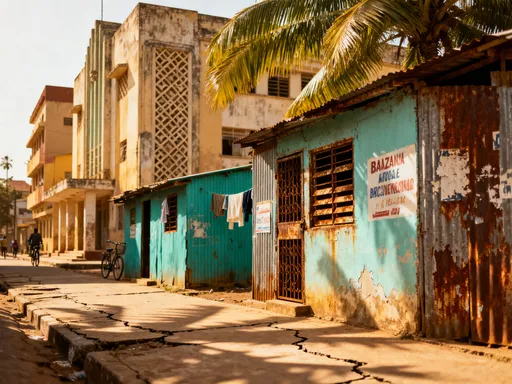
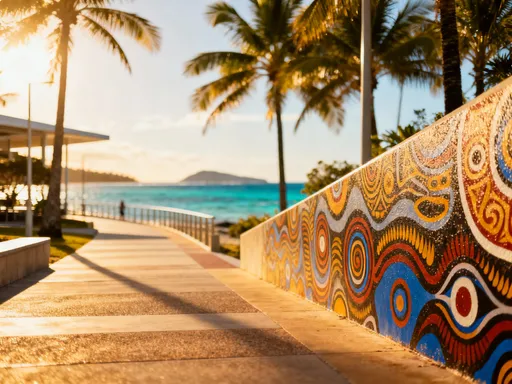
In Papara, art is not something you visit—it’s something you walk through, breathe in, and become part of. There are no formal galleries lining the streets, yet creativity spills out everywhere. Murals painted on concrete walls depict ancient Polynesian voyaging canoes, celestial navigation patterns, and legendary figures like Hiro and Oro. These are not mere decorations; they are visual storytellers, preserving myths and historical memory in bold colors and flowing lines. Each image carries meaning, often tied to local clan histories or spiritual beliefs, offering passersby a quiet lesson in cultural continuity.
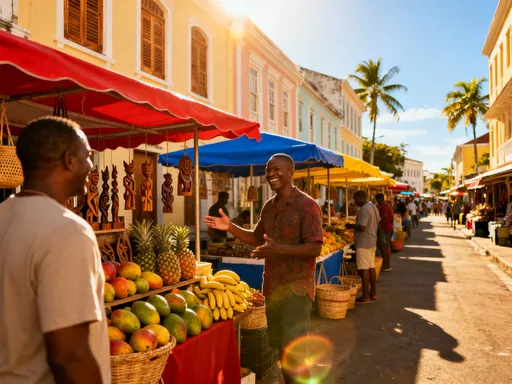
The weekly market is perhaps the most vivid expression of this organic artistry. Held under a wide canopy near the waterfront, it buzzes with energy every Thursday and Sunday morning. Here, women in colorful pareos arrange hand-dyed fabrics, their patterns inspired by ocean waves, coconut fronds, and ancestral motifs. Nearby, woodcarvers display tikis, bowls, and decorative panels, each piece shaped with tools passed down through families. The scent of frangipani and roasted breadfruit fills the air as vendors call out greetings in Tahitian, creating a sensory tapestry that feels both timeless and immediate.
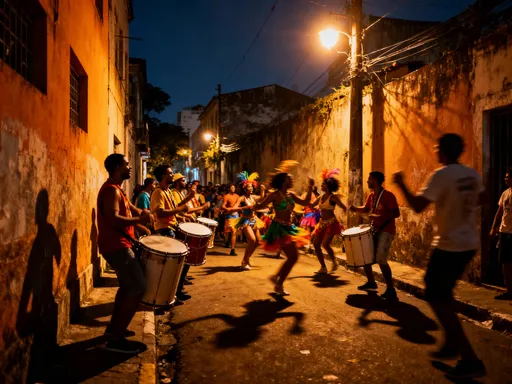
Even seemingly ordinary moments reveal artistic expression. In the village square, a group of teenagers practices the 'ōte'a, their hip movements sharp and synchronized, driven by the rhythm of a lone drum. No audience has gathered—this is rehearsal, not performance. Yet the precision and passion speak volumes about how deeply dance is woven into identity. Similarly, homes often feature hand-carved doorframes or woven blinds, not as luxury items but as everyday elements of life. Art here is not separated from function; it enhances it. A cooking bowl is both useful and beautiful; a child’s toy may be carved with symbolic patterns. This integration reminds visitors that culture thrives not in isolation but in the fabric of daily existence.
Meeting the Makers: A Glimpse into Local Craftsmanship
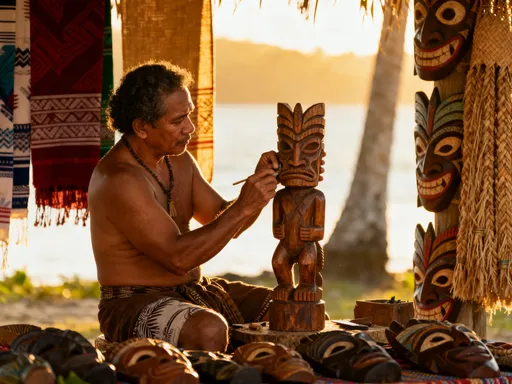
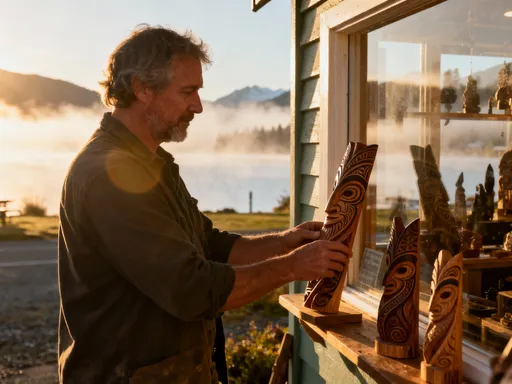
To understand Papara’s soul, one must meet its artisans—those quiet guardians of tradition who shape culture with their hands. On a narrow road leading inland from the coast, I found a small workshop shaded by banana trees. Inside, a woodcarver named Tavita worked on a tiki figure, his chisel moving with steady confidence. The scent of tamanu wood filled the space, rich and earthy, mingling with the sound of distant waves. He spoke softly about how each curve and line held meaning—the wide eyes representing awareness, the open mouth a sign of welcome, the hands resting on the belly symbolizing peace.
Tavita learned his craft from his father, who learned from his grandfather. His tools are simple: chisels, mallets, sanding stones—but his knowledge is vast. He knows which trees yield the best grain, how to cure wood under the sun, and when to stop carving so the spirit of the piece remains intact. For him, this is not production; it is communion. “Every figure has a story,” he said. “Sometimes it’s a family’s protector. Sometimes it’s a gift for a new home. I don’t make them for sale—I make them because they need to exist.”
Not far away, a weaver named Hinatea sat on a mat outside her home, fingers flying as she braided pandanus leaves into a fan. She demonstrated how the leaves are first boiled, then dried in the sun before being split and softened by hand. Her designs follow traditional patterns—some named after winds, others after ocean currents—each one a coded language of identity. “When my daughter wears a skirt I’ve made,” she said, “she carries our history with her.” These creators do not see themselves as artists in the Western sense. They are keepers of knowledge, teachers, and contributors to community well-being. Buying their work is not just a transaction; it is an act of support for cultural survival.
Rhythm of the Islands: Experiencing Traditional Music and Dance
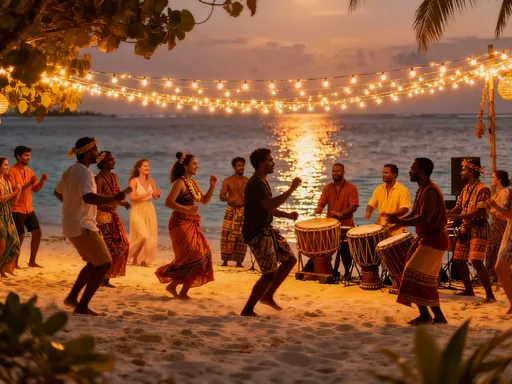
One evening, I was invited to a small community gathering where music rose like incense into the night sky. Seated in a circle under a thatched roof, elders began a himene—a traditional Polynesian choral performance characterized by rich harmonies and call-and-response singing. The voices blended seamlessly, moving between registers with a fluidity that felt almost otherworldly. No instruments accompanied them; the power came entirely from the human voice, shaped by decades of practice and deep spiritual connection.
The next day, I witnessed a drumming session led by a master drummer in his seventies. Using a hollowed-out log covered with sharkskin, he demonstrated the foundational beats of the 'ōte'a, a high-energy dance form known for its rapid hip movements. Younger dancers, mostly teenagers, followed his rhythms, their bodies moving with increasing precision. He explained that each drum pattern corresponds to a story—warfare, fishing, courtship, or religious rites—and that learning the dance means learning the history. “We don’t just move,” he said. “We remember.”
The aparima, another traditional dance, contrasts with the 'ōte'a in tone. Performed with hand gestures and gentle footwork, it often tells lyrical stories, sometimes accompanied by guitar or ukulele. During a village celebration, I saw a group of women perform an aparima about the arrival of the first canoes from the Marquesas Islands. Their hands traced the arc of sails, mimicked the motion of paddles, and gestured toward the stars—each movement a word in a silent narrative. These performances are not entertainment in the commercial sense; they are acts of remembrance, identity, and continuity. To witness them is to be included in something sacred, something that transcends time.
From Village to Table: Culture on a Plate
In Papara, food is not just sustenance—it is memory, relationship, and artistry. At a local roulotte, a brightly painted food truck parked near the beach, I ordered poisson cru, Tahiti’s national dish. Diced raw tuna marinated in coconut milk, lime juice, and shredded vegetables arrived in a hollowed-out coconut shell, garnished with edible flowers. The presentation was simple yet elegant, reflecting a deep respect for ingredients and balance. The vendor, a woman named Meihiti, smiled as she handed it over. “This is how my grandmother taught me,” she said. “Everything here comes from the land or sea nearby.”
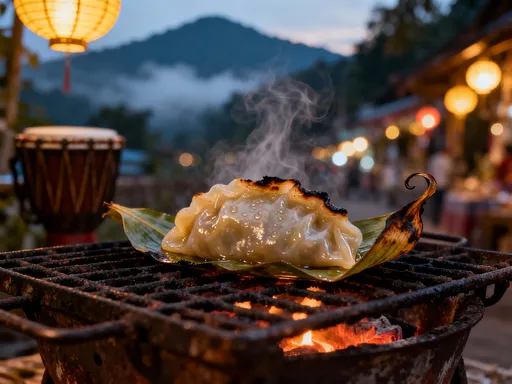
What makes Tahitian cuisine special is not just flavor but meaning. Taro, a staple root vegetable, is more than a side dish—it is considered sacred, linked to creation stories and ancestral lineage. When served at a family meal, it signifies unity and gratitude. Similarly, the use of banana leaves to wrap food during cooking is both practical and symbolic, representing protection and care. Meals are rarely eaten alone; they are shared events, often served on low tables where people sit together on mats, reinforcing bonds across generations.
During a community feast, I observed how food preparation itself is a collective effort. Women peeled and chopped while children carried water, and elders supervised the underground oven—called an ahima’a—where pork, fish, and breadfruit cooked slowly over hot stones. The process took hours, but no one seemed rushed. Instead, there was laughter, storytelling, and occasional bursts of song. When the meal finally began, everyone ate with their hands, savoring each bite. This approach to food—slow, intentional, communal—mirrors the broader cultural values of patience, respect, and togetherness. To eat in Papara is to participate in a tradition that nourishes body and spirit alike.
Navigating with Purpose: How to Visit Respectfully and Meaningfully
Traveling to a place like Papara requires more than a passport—it demands mindfulness. The best time to visit is during local festivals, such as Heiva i Tahiti in July, when dance competitions, craft fairs, and traditional games animate the entire island. However, even outside these events, cultural life continues daily, and visitors can engage respectfully by following a few simple guidelines. First, always ask permission before taking photographs, especially of people, ceremonies, or sacred objects. A smile and a polite question in basic Tahitian—such as ‘Ia ora na, e ‘ae no?’ (Hello, may I?)—goes a long way.
Supporting local artisans directly is another meaningful way to contribute. Instead of buying mass-produced souvenirs from resorts, seek out family-run stands or community cooperatives. Purchasing a hand-carved tiki or a woven mat ensures that income stays within the community and honors the labor behind each piece. Small guided tours led by residents offer deeper insight than large group excursions. These guides often share personal stories, historical context, and access to places not listed in guidebooks—like a hidden waterfall known only to locals or a quiet beach where elders gather to fish.
Equally important is adopting a slow travel mindset. Rather than rushing from one site to the next, spend time in one place. Sit at the market, sip coconut water, and strike up conversations. Let relationships form naturally. Avoid treating culture as a checklist—there is no trophy for attending a dance or buying a souvenir. True connection comes from presence, curiosity, and humility. By traveling this way, visitors do not take from the culture; they become part of its ongoing story.
Why This Journey Matters: The Power of Cultural Connection
Leaving Papara, I carried more than photographs or souvenirs—I carried a shift in perspective. This journey reminded me that travel at its best is not about escaping life but about deepening it. To witness art born from tradition, to hear songs passed down through generations, to share a meal prepared with love and history—these experiences awaken a sense of belonging to something larger than oneself. They challenge the notion of Tahiti as merely a tropical escape and reveal it instead as a resilient, creative, and deeply human culture.
In a world where globalization often erases difference, places like Papara are vital. They remind us that diversity is not just linguistic or geographic—it is artistic, spiritual, and communal. When we choose to engage with such places authentically, we do more than enrich our own lives; we help sustain ways of being that might otherwise fade. We affirm that every handmade object, every sung verse, every shared meal matters.
So let this be an invitation—not to consume culture, but to connect with it. Seek out destinations where life unfolds naturally, where people welcome you not as customers but as guests. Support those who preserve traditions, listen more than you speak, and allow yourself to be changed. Because when travel is rooted in respect and reciprocity, it doesn’t just transform the traveler. It honors the soul of the place—and ensures that its heartbeat continues to pulse for generations to come.